


How Aelga Supports Multi-Category Light Outdoor Kitchenware Production
How Aelga Supports Multi-Category Light Outdoor Kitchenware Production
Light outdoor kitchenware production becomes more demanding when a collection includes food containers, insulated drinkware, carrying bags, seasoning tools, grinders, and oil dispensers. These products may serve one outdoor dining scenario, but they use different materials, structures, assembly methods, and inspection priorities. Aelga supports the range as a coordinated product program by connecting specification planning, sampling, manufacturing, quality control, packaging, and series expansion.
Why Light Outdoor Collections Need More Than Product Variety
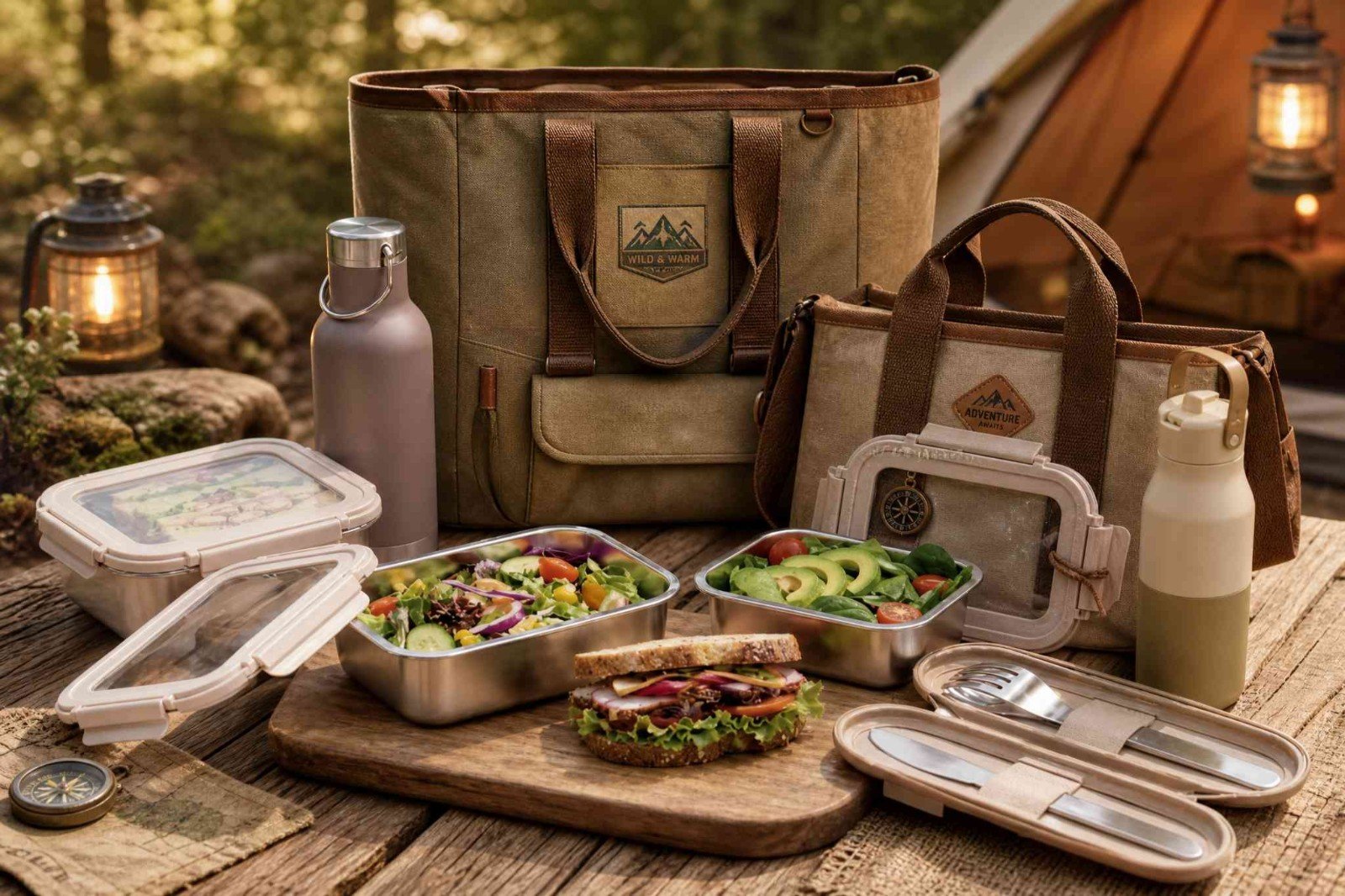
A light outdoor range is more than just an extension of your kitchenware range with more products listed. An actual outdoor meal involves storing food, transporting it, keeping drinks at the right temperature, seasoning, pouring oil or sauce, and cleaning up afterwards. All these tasks can be part of different categories, but for the user they form one sequence of activities.
Connecting these products to each other will change the focus of your development task. A good lunch box and bottle should have proportional dimensions and a suitable way to carry them. A bag for these items should be able to hold them comfortably without becoming too bulky to carry around. A grinder, spice shaker, or oil dispenser would then extend the scenario from storage to preparation and to serving.
These needs mean that multi-category light outdoor kitchenware should be developed from a shared product brief before individual products drift too far apart. The brief defines the use case, core features, materials, look and feel, launch priorities, and the role of later products in the range.
The Production Challenge Behind Multi-Category Collections
Different Products Have Different Manufacturing Requirements
Glass food containers, stainless steel lunch boxes, insulated bottles, textile bags, grinders, and dispensers do not follow the same production route. Their raw materials, component interfaces, surface finishes, assembly steps, and protective packaging can all be different.
The same differences affect what needs to be checked in a test sample. For example, a food container can be tested for closure, sealing, stacking and cleaning. A bottle must have a fitting lid, be easy to grip and to carry, and the body must be proportioned appropriately to the cap. A bag must hold the relevant products, have an adequate opening and a comfortable handle. A grinder or oil dispenser must perform the appropriate action.
Sampling and Specifications Need Clear Coordination
Controlling a multi-category program is so much easier when all the decisions about a product are written down before individual samples are developed. This includes color references, surface finish, logo and pack position, pack style, product size and relationships between sizes and functional specifications.
Sampling should therefore answer two questions at the same time: does the individual product work, and does it belong to the collection? Physical samples make it possible to review grip, closure, carrying, visual balance, and compatibility between products before the range moves into larger production planning.
Packaging and Delivery Must Support the Whole Range
Packaging is part of production coordination, not an afterthought. Glass and metal products may need stronger protection against impact and surface damage. Nested food containers may need a different packing arrangement from bottles, while textile bags require protection that preserves their shape without using unnecessary space.
When several categories are planned for one launch, delivery timing matters as well. A collection is easier to present and distribute when the core products, packaging components, labels, and supporting accessories are planned as one range rather than released according to unrelated production calendars.
When a brand manages the same collection through several factories, the risks go beyond additional communication. Different MOQs, mismatched lead times, inconsistent batch quality, unclear responsibility for defects, and complex mixed-container shipments can make a new series harder to launch and control. Aelga helps reduce this fragmentation by coordinating multiple categories through one development and production route.
How Aelga Coordinates Light Outdoor Product Development
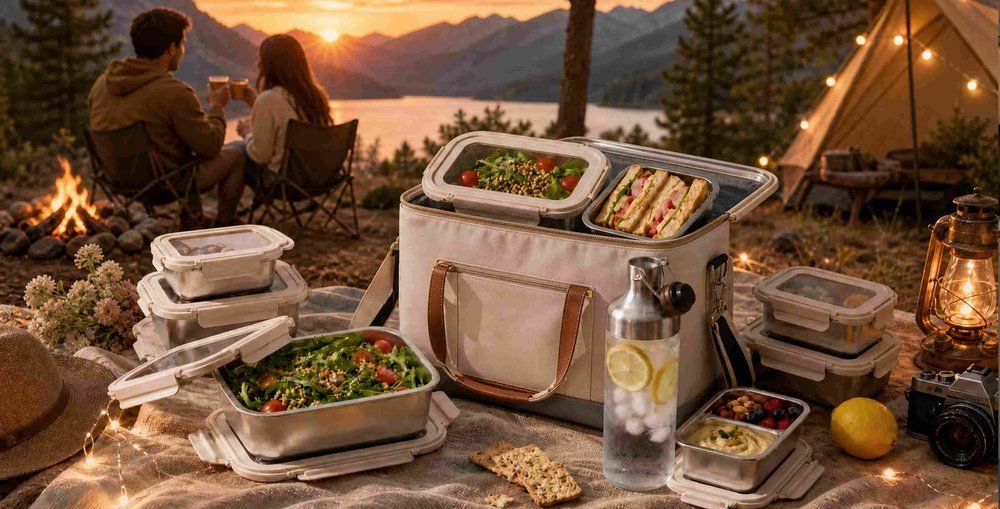
Aelga's role is not limited to acting as an intermediary between brands and separate category suppliers. Unlike suppliers focused on a single material or product category, Aelga has development experience across glass, stainless steel, textile accessories, and functional product structures. This cross-category capability allows Aelga to align specifications, sampling standards, and quality requirements even when a project combines different product types.
Building Around a Defined Use Scenario
Aelga can begin with a focused combination such as a lunch box, insulated bottle, and carrying bag. Together, these products cover food storage, drinking, and portability. They provide a clear first collection without requiring every related category to be ready at the same time.
The next products should earn their place by supporting the same routine. Food containers can extend storage and meal preparation. Spice shakers, grinders, and oil or vinegar dispensers can support seasoning and outdoor serving. This scenario-led approach keeps SKU expansion connected to use rather than to arbitrary product variety.
Keeping Colors, Materials, and Packaging Consistent
A coordinated collection does not require every item to use the same construction. It needs a recognizable set of shared cues, such as a defined color family, compatible surface finishes, related lid details, consistent logo treatment, selected material contrasts, and packaging that presents the products as one range.
Aelga's kitchenware portfolio includes glass and stainless steel food containers, storage products, spice shakers, grinder, oil and vinegar dispensers, lunch bags, and drinkware. These categories can be reviewed together when a collection needs to connect storage, carrying, drinking, preparation, and serving.
For brands that need a higher level of customization, Aelga's OEM and ODM service can cover structural review, prototyping, pre-production sampling, manufacturing, quality control, logistics, and product presentation. This gives the collection a common development path even when the products themselves require different processes.
Each collection is managed by a dedicated project lead who coordinates the product line's visual consistency, sample iterations, and cross-category handoffs. This gives brands one coordinated communication path instead of requiring different teams to manage each product independently.
Balancing Existing Products with New Development
With Aelga's established product library, a feasible collection can combine mature existing products, targeted modifications, and fully customized new development. Brands do not need to develop every item from a new mold. Existing products can help reduce tooling investment and shorten development lead time, while modified or new products can add differentiation where needed.
The right balance depends on the collection brief and the level of differentiation required. Reviewing this mix early helps prevent unnecessary development work while keeping enough room for a distinctive series.
Quality Control Across Different Product Functions
Quality control should be product-specific, supported by one coordinated plan across the range.
For lunch boxes and food containers, focus on lid fit, sealing, closure strength, stacking, surface quality, cleaning, and carrying performance.
For insulated bottles and drinkware, check lid operation, leak resistance, grip, portability, component fit, and finish consistency.
For bags, inspect stitching, handle strength, opening size, capacity, lining or insulation, and product protection during carrying.
For seasoning tools, grinders, and oil dispensers, review dispensing or grinding performance, component fit, opening and closing, refillability, cleanliness, and ease of cleaning.
Finally, quality control should compare samples with production units across color, finish, dimensions, component fit, and packaging protection. Catching differences before the collection expands is easier than correcting a mismatch after several related SKUs are already in production.
Conclusion
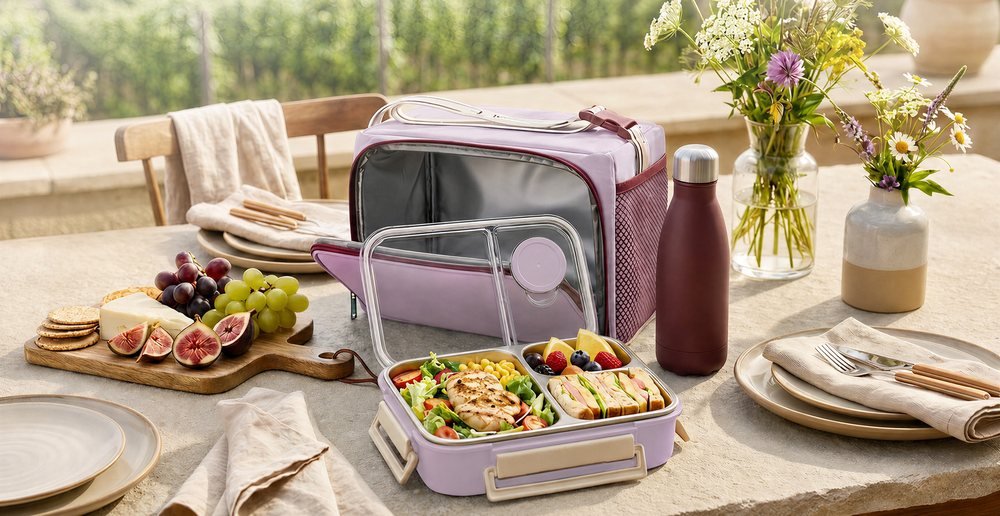
Multi-category light outdoor kitchenware production depends on coordination, not on product count alone. Lunch boxes, bottles, bags, spice tools, grinders, and dispensers require different materials, structures, production steps, inspection points, and packaging solutions. They still need to work together as one recognizable collection.
Aelga connects these decisions from product development and sampling through quality control, packaging, and series expansion. This cross-category capability distinguishes Aelga from manufacturers focused on a single product category and gives brands building their first complete light outdoor collection a practical route from a focused core range to a broader system.
Discuss your collection direction with Aelga to identify the right starting SKUs and development path.
FAQ
Q: Why is multi-category light outdoor kitchenware production difficult?
A: Because different categories use different materials, structures, production processes, and inspection points, while still needing to work as one coordinated collection.
Q: Can a light outdoor collection start with only a few SKUs?
A: Yes. Brands can begin with a focused core assortment and add related products as the collection develops.
Q: How can different products maintain one collection identity?
A: Use shared colors, finishes, proportions, logo treatment, and packaging while preserving the construction required for each product's function.
Q: How does Aelga support production coordination?
A: Aelga coordinates product development, structural review, sampling, production, unified quality control, and packaging. This helps brands avoid the fragmented workflow of managing several suppliers.