


From Product Concept to Market Success: OEM Development of a Fermentation Jar
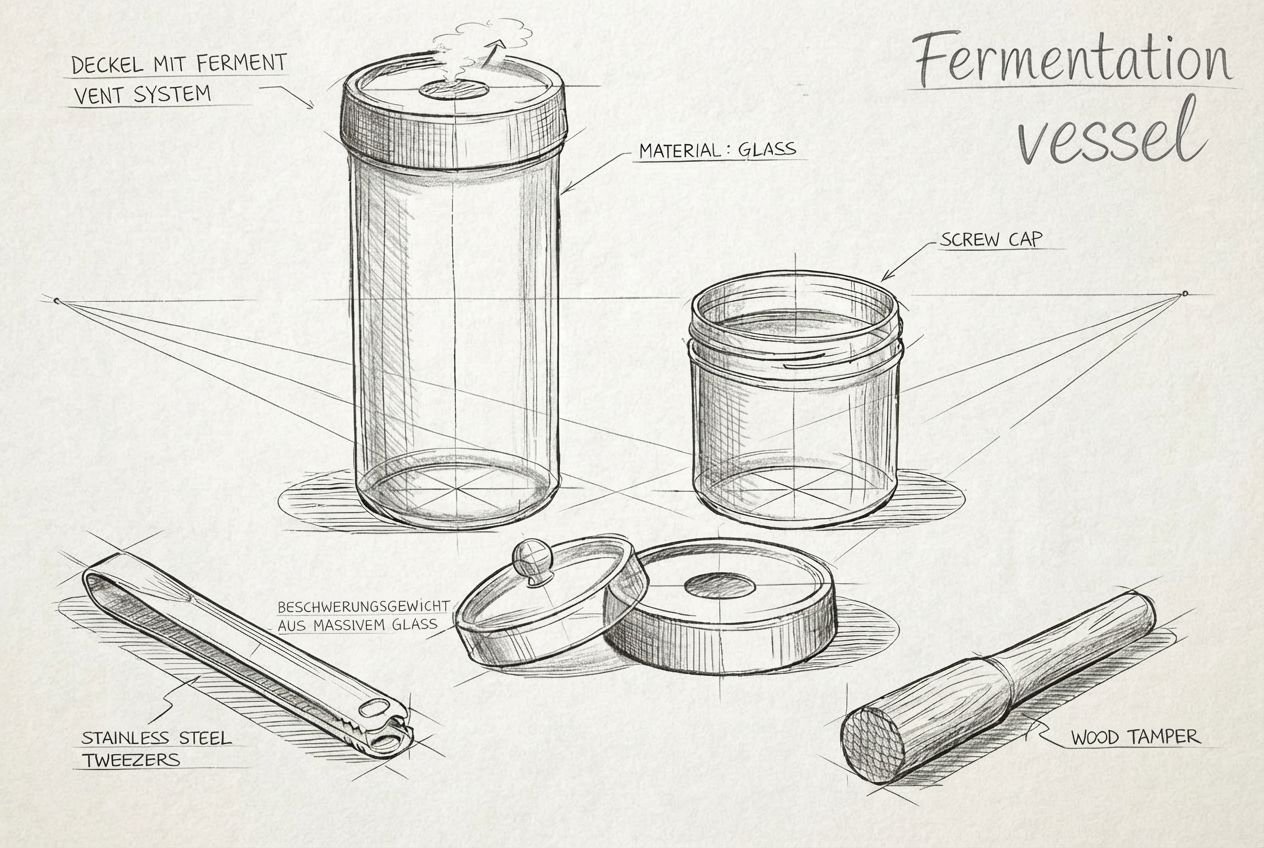
A sketch can tell you what a product should look like. It cannot tell you whether a one-way venting lid will degas reliably, whether a fermentation weight will actually work, or whether the parts will go together consistently on a production line. That gap is exactly what we ran into on a fermentation jar OEM project with GEFU, an award-winning German kitchenware brand. Aelga helped carry the early concept through design development, structural engineering, prototype testing, and sample refinement - and the project reinforced a point worth making before any tooling budget gets approved: you have to evaluate how a product works, not just how it looks.
Where the Project Started: A Concept Without Engineering Detail
The initial fermentation jar concept had a clear design direction, but it lacked the technical data needed to fabricate and evaluate a prototype. Key questions remained: how would users fill the jar, keep the vegetables submerged, release fermentation gases, and access the contents? What would prevent leaks? What tolerances would allow the parts to be assembled consistently?
Pressure management and sealing were central to the product’s function. An attractive concept drawing could not establish whether the press would work or whether the lid would maintain the intended seal during long-term use. If critical structural or functional issues surface only after tooling begins, they can lead to costly mold changes, project delays, or complaints after launch. Resolving these questions early helps reduce avoidable late-stage changes.
So the job was never just reproducing the drawing properly. The project needed a development path that could turn the idea into something engineers could genuinely review - and surface the real risks before production preparation began.
The Challenges That Defined the Project
 Pressure and venting had to be proven physically
The fermentation process produces gases which have to be let out on time, as letting in air will introduce spoilage agents that can cause mold in the food. None of this can be confirmed from a render - the team had to assemble real samples, watch how the design actually behaved under a real ferment, and refine it around what physical testing revealed.
Glass, wood, and steel had to behave as one system.
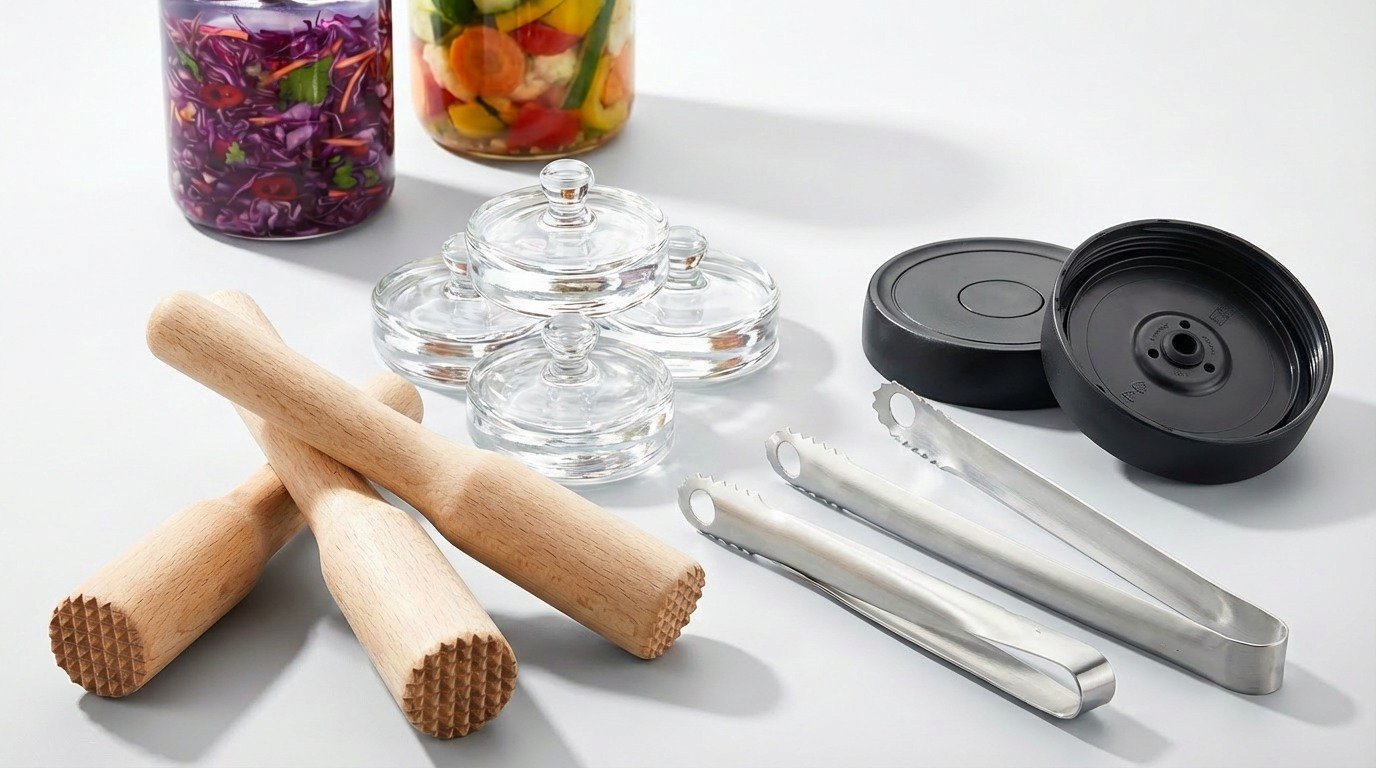
The kit consists of a jar made from borosilicate glass, one-way degassing lid, a glass fermentation weight, a tamper made of beech wood, and stainless steel tongs in 304 grade. Each material (glass, wood, and steel) shrinks to its own references during machining; therefore, all interfaces and dimensional parameters of assembly needed to be designed in regard to each other. A design that is coherent on a render cannot pass the test of parts interaction.
The weight no one had calibrated
The product relied on an integrated glass fermentation weight - and at the time, most one-piece fermentation jars shipped without a weight at all, leaving customers to buy one separately. Weights sold off the shelf carried masses set by experience, with no fermentation testing behind them: too heavy and they crush delicate vegetable tissue, too light and the food floats to the surface and spoils. It is the most common complaint across the category. GEFU's kit had to solve this from scratch - the right mass, in a material that belonged in a food jar, at a price that fit the product.
Tooling had to balance appearance against feasibility.
Mold design shapes the product geometry, how easy the part is to manufacture, and how much the program costs. Wall thickness, draft angles, transitions, and structural features all need engineering input long before a mold is finalized. On this project, visual refinement and production readiness could not be treated as separate phases - design intent and tooling feasibility had to be weighed together from the start.
How Aelga Approached the Development
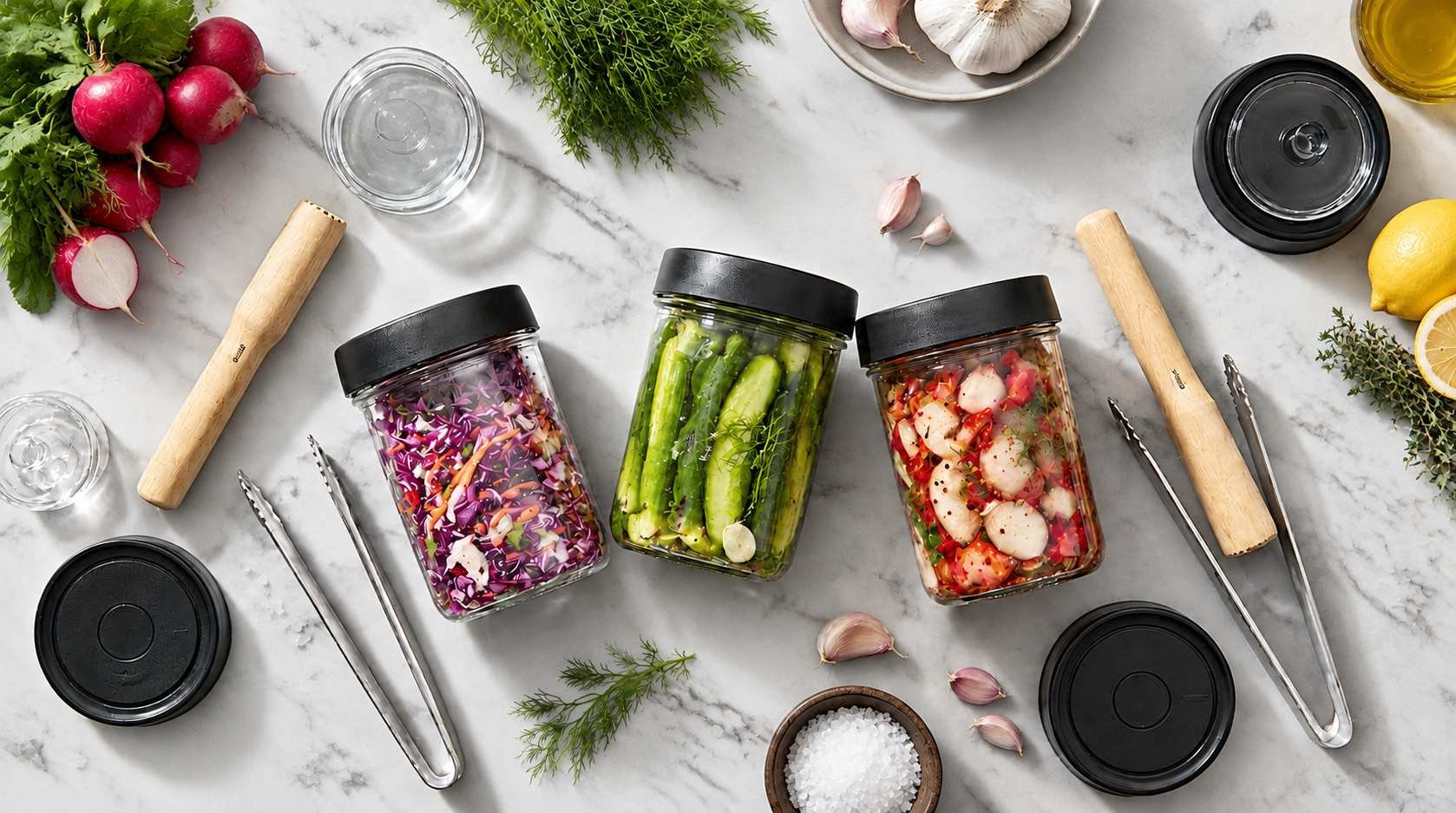 Aelga’s design and structural engineering teams treated the customer’s drawing as a starting brief, developing the jar’s structure around how users would load, press, weight, vent, and serve from it. A dedicated project manager coordinated communication with the customer to keep requirements, design changes, and sample feedback aligned.
The team defined the key components—the one-way degassing lid, glass fermentation weight, beechwood tamper, and 304 stainless steel tongs—and assessed how they fit together. Physical samples and fermentation trials helped calibrate the weight to keep food submerged without excessive pressure, while testing also covered venting, sealing, assembly, and everyday handling. In parallel, the team reviewed the mold structure before tooling and refined the design through successive sample iterations.
A pilot run using actual tooling checked tolerances, assembly, and sealing before full-volume production. After multiple rounds of refinement and production validation, the set successfully entered mass production and was launched in the market. Component fit and assembly consistency were verified to support reliable, repeatable production. For the European target market, the product and materials were reviewed against relevant food-contact requirements.
The project shows how engineering review, physical testing, and production validation can turn a concept into a proven OEM product and repeatable production process.
What This Case Teaches About OEM Product Development
A sketch is a starting point, not a production specification
Early concepts earn their place by capturing direction and intent. They are no substitute for dimensions, interface definitions, functional criteria, or manufacturing review. A structured development phase is what bridges the two - and it gives the brand and its OEM partner a shared, factual basis for every decision that follows.
Early engineering review buys certainty later.
Mold and assembly questions are always cheaper to answer while the product is still on the drawing board than after tooling and production preparation have moved. Reviewing structure, material interfaces, and fit early lets both sides make design decisions with real information instead of assumptions.
Good OEM coordination goes beyond manufacturing capacity.
Most brands need more than production capacity. They need a partner who can stitch design development, engineering, sampling, tooling input, and product evaluation into one coherent program. On this project, that was Aelga's role: developing the concept into a testable product direction and coordinating the technical decisions along the way - a wider contribution than producing a finished item from a ready-made spec.
Conclusion
The GEFU fermentation jar project shows how early engineering decisions can shape the outcome of an OEM product. Through structural review, physical testing, sample iteration, and production validation, the original concept became a finished product that launched successfully and has been on the market for years.The result was more than a set of production-ready drawings: it was a mature product with its key functions validated and a stable, repeatable production process.
If you are developing a product concept for manufacture, Aelga can help bridge the gap between design and production.
FAQ
Q: What information should a brand provide for an OEM product concept?
A: A sketch is a good start. Beyond that, it helps to share the intended use, target materials, the functional requirements that matter most, dimensions or reference products, target-market requirements, and any constraints you already know about.
Q: Why test a fermentation jar prototype before tooling?
A: Testing before tooling gives the team room to refine the design before the mold is committed, which is when changes are still inexpensive.
Q: What did Aelga contribute to the GEFU fermentation jar project?
A: Aelga carried the project from the initial sketch through design and structural refinement, physical sample evaluation, fermentation-weight calibration, press testing, mold review, and iteration.
Q: Does reviewing European food-contact requirements mean a product is certified?
A: No - and the distinction matters. Reviewing applicable requirements during development is preparation, not proof. Certification takes product-specific testing and documentation for the relevant market and intended use.