

Wood, Glass and Stainless Steel in Aelga New Kitchenware Design
Wood, Glass and Stainless Steel in Aelga New Kitchenware Design
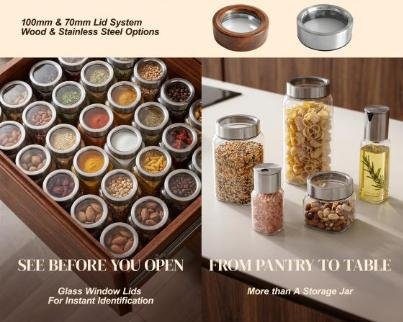
New kitchenware design becomes more distinctive when materials are selected for clear functional roles rather than added as decoration. In Aelga's Multi-purpose Glass Tube Vessel Collection and Square Meets Round Modular Storage System, glass supports visibility, wood adds warmth and tactile character, and stainless steel helps define structure and surface contrast. The result is a material combination that can change how familiar storage products look and work in a collection.
Multi-purpose Glass Tube Vessel Collection and the Value of Visible Structure
Glass Creates Direct Content Visibility
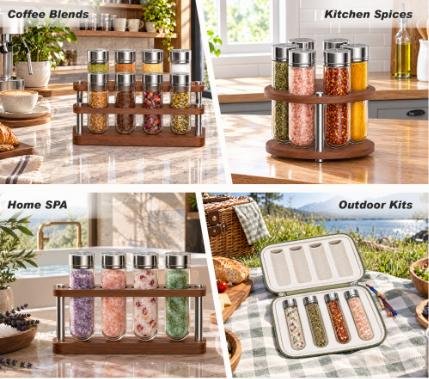
The glass tube vessel collection uses the transparency of glass to make the stored contents part of the product presentation. A user can identify what is inside without opening the container, while the slim vertical form creates a different visual rhythm from a conventional wide storage jar.
This type of visibility is useful for dry ingredients, pantry organization, seasoning, or countertop display because the product communicates its contents directly. For a retail collection, the transparent body also allows the material, color, and texture of the contents to enhance the overall shelf display.
Vertical Forms Support Display and Organization
The slim vertical design helps multiple vessels form a more cohesive visual system while using countertop space efficiently. At the same time, the design must remain practical for everyday handling, including opening, filling, cleaning, and positioning alongside other kitchenware.
Stainless Steel Details Reinforce Product Identity
Stainless steel can be used to define the upper section, lid, or connection between materials. Its reflective surface introduces a clean contrast against transparent glass and can help connect the glass tube vessel collection with other kitchenware products that use metal details.
The metal component also affects how the product is perceived in the hand and on the countertop. Its proportion, edge treatment, and relationship with the glass body need to feel intentional. A small change in the metal-to-glass balance can change the visual weight of the whole product.
Square Meets Round Modular Storage System for Warm and Practical Storage
Wood Adds a Natural Tabletop Presence
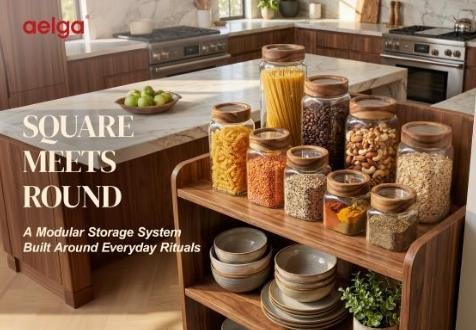
Wood gives the Square Meets Round system a recognizable tabletop character through its color, grain, and tactile surface. Used as a lid or accent rather than covering the whole product, it creates a warmer visual identity while allowing the container’s practical structure to remain clear.
Transparent Glass Keeps Contents Easy to Identify
Transparent glass allows users to identify stored ingredients at a glance, making the containers suitable for kitchens, pantries, breakfast areas, and tabletop use. This visibility keeps the decorative material choices connected to an everyday storage function.
Material Contrast Helps Create Product Differentiation
The contrast between wood, glass, and stainless steel can help a familiar storage format occupy a different visual position in the market. It can feel more natural than a fully metallic product and offering a more defined design than a simple clear glass jar.
For a coordinated collection, the same principle can be adjusted across proportions and functions. The wood area may become a lid, frame, base, or accent, while glass and metal continue to support visibility and operation.
How Materials Shape New Kitchenware Design
When glass, wood, and stainless steel are combined in one product, the way the components connect affects both function and appearance. Lid positioning, component fit, opening mechanisms, interface dimensions, and alignment all influence how the product performs in everyday use.
Physical sampling allows these details to be evaluated before the design moves forward. Samples can be used to check lid fit, opening convenience, grip, component alignment, and the visual transition between different materials. Where necessary, dimensions or structural details can then be refined before the design is finalized.
Aelga’s OEM and ODM development process connects design evaluation with prototyping, sample confirmation, structural refinement, and manufacturing preparation. This helps turn a multi-material concept into a workable product while identifying key engineering issues before the project enters the next stage of development.
From One New Product to a Coordinated Series
A consistent material design direction can establish a unified visual language across a broader kitchenware series, but this does not mean that every product should use the same structure. Surface treatment, overall proportions, lid details, and material accents can be repeated to create visual continuity, while sealing systems, opening mechanisms, component fit, and structural requirements need to be developed according to the function of each product.
Sampling helps determine which design elements can be carried across a series and which need to be adjusted for an individual item. By evaluating physical samples, the development team can review component fit, usability, material transitions, and overall consistency before extending the design language to additional products.
A successful material direction becomes more valuable when it can move beyond one item. The Multi-purpose Glass Tube Vessel Collection can suggest a broader family of transparent storage and seasoning products, while the Square Meets Round Modular Storage System can extend into canisters, tabletop storage, or related kitchenware with the same warm material language.
The products do not need to look identical. A storage jar, dispenser, grinder, and serving product have different operating requirements. What connects them can be the balance between transparent glass, warm wood, and stainless steel details, adapted to the function and structure of each category.
This is where product development experience becomes important. A new material combination should be evaluated not only for visual consistency, but also for usability, manufacturing feasibility, sampling repeatability, and how naturally it can fit into the rest of a brand’s assortment.
See the New Designs at the Canton Fair
The new designs can be introduced alongside Aelga's wider kitchenware and glass product direction at the 140th Canton Fair. Buyers can examine the material transitions in person, compare the products with related storage and tableware items, and discuss how a design may be adapted for a particular collection.
A physical meeting is especially useful because the relationship between wood, glass, and stainless steel is not only visual. Weight, balance, texture, opening method, and component scale all contribute to the final impression.
Buyers can use the Canton Fair invitation page to arrange a discussion, or review the broader Aelga product range before defining which new product direction they want to explore.
Conclusion
New kitchenware design becomes more meaningful when materials solve several product questions at once. In the glass tube vessel collection, transparent glass supports visibility and display. In the Square Meets Round storage system, wood adds warmth while glass keeps contents recognizable, and stainless steel can add a clean, durable-looking accent to the overall design.
Aelga's multi-material approach gives brands a way to develop distinctive products while keeping function, sampling, and series planning in view.
Discuss a new kitchenware design with Aelga to explore how wood, glass, stainless steel, and product structure can work together.
FAQ
Q: What is the value of multi-material kitchenware design?
A: Multi-material design can give a familiar product a clearer identity while allowing each material to support a different role. Glass may provide visibility, wood can add warmth and tactile character, and stainless steel can contribute structural detail and surface contrast.
Q: Why is glass useful in the Multi-purpose Glass Tube Vessel Collection?
A: Transparent glass makes the stored contents easy to see and allows the color and texture of the ingredients to become part of the product presentation. The vertical form can also create a distinctive visual rhythm for storage, seasoning, or countertop display.
Q: What does the Square Meets Round Modular Storage System offer?
A: The wood element gives the product a warmer tabletop presence, while the transparent glass body keeps contents easy to identify. This combination balances natural material character with the practical visibility and storage presentation expected from a kitchen product.
Q: Can a wood, glass, and stainless steel design become a product series?
A: Yes. The same material language can be adapted to storage jars, seasoning products, dispensers, grinders, and related tableware while allowing each product to keep the structure required for its function. Sampling helps confirm the visual and practical relationship across the range.