


From Design Sample to Bulk Delivery: How Buyers Evaluate Quality Consistency in Kitchenware Suppliers
A sample on the bench and a carton on the dock are two different products. Most kitchenware buyers have felt the gap: the approved prototype poured cleanly and its lid seated snugly, yet in the first bulk order the spout drips and the lid feels slightly loose. Neither issue may be serious enough to fail a basic inspection, but the product no longer feels like the one that was signed off. This article looks at how a buyer evaluates quality stability between sample and bulk, and how Aelga holds the confirmed sample across a full production run.
Where Quality Risk Actually Sits Between Sample and Bulk
The risk is not that the sample is bad; it is that the sample is not the only product that gets made. Scaling from a few approved units to thousands of cartons multiplies every input: the glass body, the lid, the seal ring, the spout, the packing material. A dimensional drift of a fraction of a millimetre in a lid thread, or a change in seal thickness from one lot to the next, changes how a finished jar fits together even when each part looks correct on its own. These are consistency failures, not dramatic ones, and they surface as returns rather than one visible defect. Product consistency in manufacturing is a key measure buyers should evaluate, and it is decided in the process, not in photos.
Quality Control Focus by Product Type
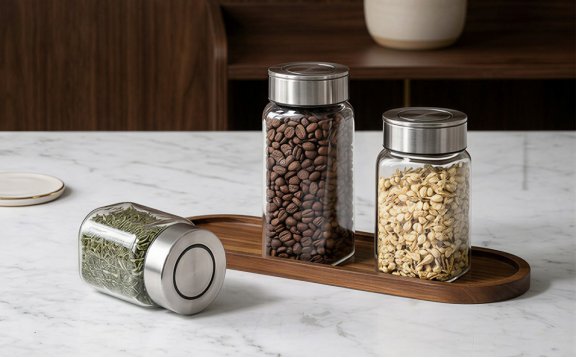
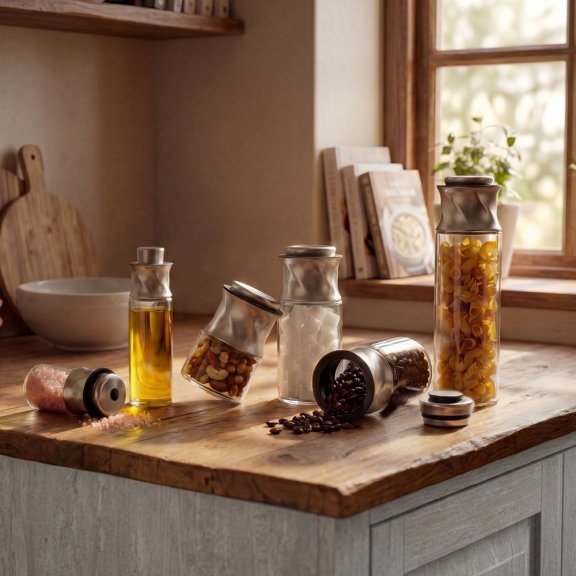
Different kitchen products fail in different places, so the inspection emphasis has to move with the product. A glass storage jar is a multi-part assembly: the neck, the lid structure, and the seal ring are made from different materials and finished by different processes, so even a small size deviation changes how the parts fit together. At sample confirmation the whole assembly is tested, and repeated screwing and opening cycles expose overtightening, looseness, or a lid that will not release. In volume, the key dimensions and assembly performance are checked against the approved sample and the technical file, so a deviation is reviewed before it repeats. That is why a buyer should ask how a line of storage jars and canisters is kept consistent, not just what the jars look like.
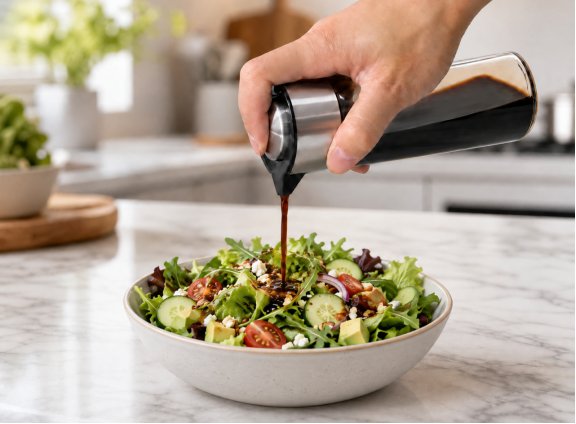
An oil or vinegar dispenser is judged on function, not appearance. The pour is tested by hand: it should stay smooth while the bottle is tilted, without interruption or heavy splashing, and once upright, the spout should not retain oil or drip. Multiple units are sampled to rule out unit-to-unit differences, and batch results are compared to judge whether the feel stays stable rather than merely meeting a visual spec. The same discipline extends to a seasoning dispenser with a rotating lid and stepped hole positions, which is checked for port alignment, flow at each setting, and seal integrity, and to a grinder, where the milling unit and its housing are separate parts whose fit decides whether the grind stays even across a full run. Across the oil and vinegar dispensers, seasoning items, and grinders the pattern is the same, and a buyer should ask any supplier to describe it before a first order.
The Key Checkpoints from Sample to Bulk
A stable supplier can describe a clear sequence between the approved sample and the shipped carton. The first checkpoint is specification confirmation: the approved sample's dimensions, materials, seal, spout, and packaging layout are written down and frozen, so every later stage is checked against the same reference. The second is the critical function check at sample stage, covering lid fit and release, pour behaviour, and closure performance. The third is in-process control: key dimensions and assembly performance are checked against the approved sample and the technical file, so drift is caught while it is still cheap to correct. The fourth is finished-goods inspection, where the same functional checks are repeated on a representative sample of the lot. The fifth is packaging and transit protection, part of the quality plan rather than a final step: the box is designed around each item's shape, weight, and break points, with dividers or cushioning to stop items striking each other, and the layout is reviewed against the target shipping environment.
Sample Matches Bulk: How Aelga Holds the Standard
Aelga's working rule is that the approved sample is the standard, not a starting point: its requirements are carried into the production and inspection documents and checked at sample stage, on the line, and at final inspection. For a storage jar, jar and lid fit is tested as a complete assembly against the approved sample, and repeated open and close cycles surface any overtightening, looseness, or rough release before the lot is released. For an oil dispenser, the pour is checked by hand, the spout checked for dripping once upright, and units from different batches compared so the pour feels the same from the first carton to the last. For a packed kit, the packaging is treated as part of the product: each piece is fitted into the box with dividers and cushioning for its shape and weight, and the layout is reviewed against the intended transport route, because a glass set that arrives whole protects the product in a way no label can. Aelga has been manufacturing kitchenware in Qingdao since 2006. Its production and quality management systems provide a foundation for maintaining product requirements from initial sample approval through repeat orders.
What This Means for Buyers
For a buyer, evaluating a supplier's quality assurance comes down to one question: do the approved sample's requirements reach the finished product and survive the order? Can the supplier name the specific checkpoints between sample and bulk, or only talk about the finished product? Are critical dimensions held against a frozen sample, or re-judged each run? Aelga's design experience is reflected in its portfolio of more than 100 design and utility model patents and its iF Design Award recognition. For buyers, however, design capability is only one part of supplier evaluation. The ability to maintain product specifications and functional performance from sample approval through repeat production is equally important. Over a long partnership, a buyer also weighs how the supplier communicates problems during production and how steadily delivery holds to the agreed plan, because issues surfaced early cost far less than late surprises. The full scope is on its OEM/ODM services page.
Conclusion
The gap between a confirmed sample and a bulk order is where a kitchenware supplier's stability is really measured. Aelga holds the approved sample's requirements across five checkpoints, from frozen specifications and sample-stage function checks through in-process control, finished-goods inspection, and transit-tested packaging, so the product at the dock is the one the buyer approved. The same sample-to-bulk control principles can be applied across different product categories, while inspection requirements are adapted to each product's structure and function. This gives buyers a clearer basis for developing additional SKUs and repeat orders. For buyers who want to see the items this article is built around, the storage jars and canisters range is the natural place to start, and the argument stands or falls on whether a supplier can show, not just say, that the sample matches the bulk. If you are sourcing kitchenware and need consistent quality from sample to mass-production, contact Aelga to discuss your project requirements.
Frequently Asked Questions
Q: What is the biggest quality risk between a sample and bulk production?
A: It is not a broken part but a consistency drift. Small changes in dimensions, seal thickness, or spout finishing across a large run make the bulk product feel different from the approved sample even when every part looks correct. The approved sample has to be the standard checked at the bench, on the line, and at final inspection.
Q: What should a buyer check specifically on glass storage jars?
A: The jar should be tested as a complete assembly, neck, lid structure, and seal ring together, because those parts come from different materials and processes. Repeated screwing and opening cycles reveal overtightening, looseness, or rough release, and in volume the key dimensions and assembly performance are checked against the approved sample and the technical file.
Q: How should packaging be evaluated for glass items?
A: Packaging is part of the quality plan, not a final step. The box should be designed around each item's shape, weight, and break points, with dividers or cushioning to stop items striking each other, and evaluated against the target transport environment. If shifting or damage appears in testing, the internal support or box structure is adjusted before the order ships.
Q: How can a buyer tell whether a supplier will keep the product consistent over repeat orders?
A: Ask the supplier to describe its checkpoints between sample and bulk, and whether critical dimensions and function checks are held against a frozen sample. A supplier that can name the process and back it with a management system and a design capability is the one a buyer can build a long-term program on. Aelga has been producing kitchenware in Qingdao since 2006 and is certified to ISO 9001, ISO 14001, and ISO 45001, holding more than 100 design and utility model patents.