


Kitchenware Market Trends 2026: Sustainable, Durable, and Wholesale-Ready Product Opportunities
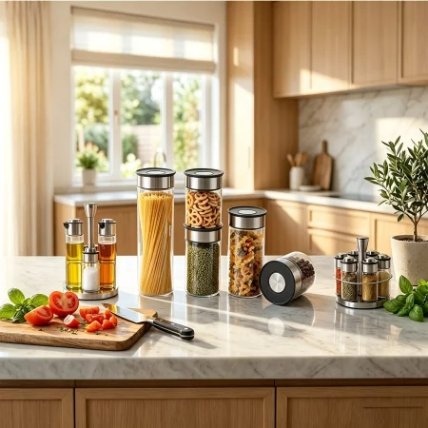
The kitchenware market in 2026 is becoming more segmented, with clearer and more specialized positioning. It is about the desire for products that will look better, work longer, minimize waste, and be suitable for modern retail programs.
From the wholesaler, importer, and private label perspective, the crucial question is what products will unite the attractiveness of sustainable kitchenware, longevity of kitchenware, and benefits of mass wholesale production. In particular, Aelga specializes in multi-material kitchenware, especially those made of glass and stainless steel combinations. These include storage jars, seasoning kits, oil and vinegar dispensers, food storage containers, and drinking glasses.
Why Kitchenware Market Trends in 2026 Are Shifting Toward Long-Term Value
What Is Driving Demand for Better Kitchenware Products?
A kitchen is no longer only a cooking area. A kitchen is a storage area, display space, extended dining area, and lifestyle zone as well. Open shelving, pantry solutions, coffee nooks, and small apartments make consumers more interested in materials that are seen, space-saving forms, and related product lines.
Several demand drivers are shaping product selection:
l Home cooking requires reliable daily-use containers, dispensers, and tools.
l Open kitchen layouts increase demand for clean visual design.
l Online retail rewards clear functions and photogenic materials.
l Private-label brands need customizable and repeatable collections.
l Wholesale buyers prefer structures that reduce leakage, breakage, and return risk.
How Sustainability and Durability Are Changing Buyer Expectations
Sustainability and durability are now linked. A product cannot be truly sustainable if replacement is needed after a short period of use. Durable kitchenware supports sustainability by reducing waste, extending product life, and improving cost per use.
For B2B buyers, long-term value usually includes food-contact materials such as glass, stainless steel, and food-grade silicone; stronger lids and sealing rings; easy-clean surfaces; practical sizes for pantry, table, café, restaurant, and travel use.
What Makes Sustainable Kitchenware More Attractive to Modern Consumers?
Why Glass, Stainless Steel, and Reusable Materials Are Gaining Attention
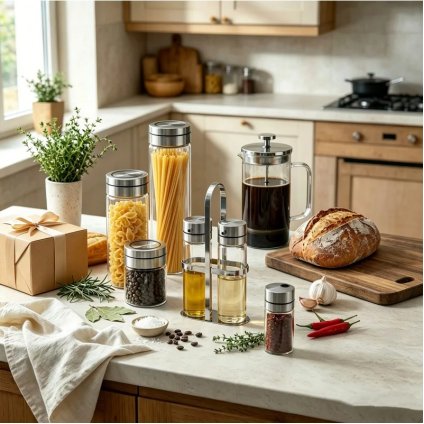
Modern consumers increasingly associate sustainable kitchenware with cleaner storage, reusable materials, and reduced dependence on disposable plastic. Glass keeps contents visible and reduces odor transfer. Stainless steel adds strength, corrosion resistance, and a premium surface. Silicone sealing parts improve airtight performance without making the product complicated.
Aelga products reflect this material direction. The glass storage jar uses food-grade borosilicate glass or high-quality soda-lime glass, a stainless steel lid, and a silicone sealing ring. The transparent body helps users check contents quickly, while the press-type sealing cap isolates air and moisture to help keep coffee beans, tea, candy, oats, nuts, and other dry ingredients fresh.
How Sustainable Kitchenware Supports Healthier and Cleaner Kitchen Storage
Sustainable kitchenware should not rely only on material claims. A strong storage product needs visibility, airtight sealing, size variation, shelf display value, and repeated-use durability. Aelga’s storage jar series covers multiple capacities, helping wholesalers build sets instead of selling only one container. This matters because bundled storage products can match pantry organization searches, giftable kitchenware themes, and modern kitchen storage needs.
Why Durable Kitchenware Is Becoming a Key Product Opportunity
What Buyers Look for in Durable Kitchenware Products
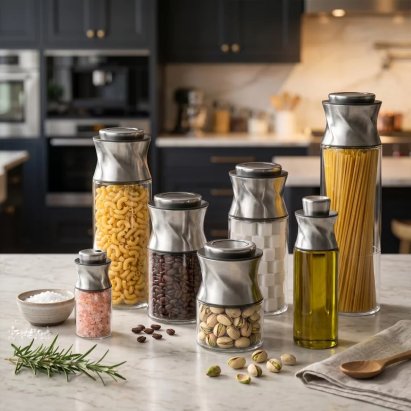
However, durability in kitchenware does not only refer to thickness. Buyers in the B2B market tend to consider structural durability, material stability, and performance convenience. The product should withstand regular washing, regular handling, regular opening, and various kitchen settings.
The list of characteristics that make up a durable kitchenware item should include materials such as borosilicate or soda-lime glass, a stainless steel shell or lid for protection, leakproof/moisture resistance design, easy dispensing/grinding, easy cleaning, and stable appearance with time.
How Leak-Proof, Rust-Resistant, and Easy-Clean Designs Add Product Value
Small technical details often decide whether durable kitchenware performs well in real use. Aelga’s oil and vinegar dispenser uses a glass bottle with a stainless steel casing to improve texture and help protect the glass body. The oval ergonomic design supports grip comfort and countertop efficiency, while the smooth pouring structure helps control oil or vinegar and reduce dripping.
Other details also support stronger wholesale value:
l Leak-proof lunch boxes for office meals, school use, commuting, and outdoor activities.
l Rust-resistant stainless steel lids, casings, and containers for long-term stability.
l Rotating spice shaker lids with different hole sizes for salt, pepper, chili powder, and cumin.
l Stainless steel lunch boxes that resist odor absorption and clean more easily than plastic containers.
Conclusion
The most important kitchenware market trends in 2026 point toward a more demanding market. Consumers want cleaner materials and better everyday experiences. Retailers want stronger shelf appeal and fewer quality risks. Importers and private-label brands want suppliers that can turn product ideas into repeatable, scalable collections.Sustainable kitchenware and durable kitchenware are not separate themes. A reusable glass jar, a stainless steel food container, a drip-controlled oil dispenser, or an airtight spice shaker can deliver sustainability only when the product also works reliably in daily life.
Aelga’s glass and stainless steel kitchenware systems connect these needs through storage, seasoning, dispensing, food container, and drinkware categories. For buyers planning 2026 product lines, the clearest opportunity is to build coordinated collections that combine modern design, reliable materials, and practical functions.
Contact us to explore wholesale-ready kitchenware solutions for sustainable, durable, and customizable product lines.
FAQ
Q: What are the biggest kitchenware market trends for Aelga buyers in 2026?
A: Market trends for kitchenware include the use of sustainable kitchenware, durable kitchenware, modular kitchenware products, premium quality materials, ergonomic designs, and greater demand for wholesale-oriented assortments.
Q: What makes durable kitchenware suitable for wholesale channels?
A: Quality kitchenware that will last well can be marketed wholesale if the product can withstand frequent usage, shipping, cleaning, and merchandising. Durability features such as shatter-resistant glass, stainless steel shielding, leak-proof caps, rustproof components, and washable finishes.
Q: Which Aelga products match sustainable kitchenware and durable kitchenware demand?
A: The sustainable kitchenware and durable kitchenware compatible Aelga products are those that comprise glass food jars with stainless steel lids, dispensers for oils and vinegar that have glass body enclosures, spice shakers with rotating lids, glass food containers, stainless steel lunch boxes, glassware for beverages, and stainless steel water bottles.