


Light Outdoor Kitchenware: Building a Flexible Outdoor Living Collection
Outdoor living is no longer limited to hiking, camping, or specialized adventure equipment. Everyday routines increasingly move between the kitchen, workplace, car, park, picnic area, and weekend destination. According to the 2025 IHA Home and Living Survey, 49% consumers bring home-prepared food to work, 39% take it during their commute, 38% bring it to school, and 37% take it to outdoor leisure, sports, or event settings.
This shift is creating a space between conventional household kitchenware and professional camping gear. Light outdoor kitchenware brings familiar food storage, drinkware, carrying, seasoning, and serving products into more flexible indoor-to-outdoor scenarios.
For product collections, the opportunity is not simply to add “outdoor” features to individual items. It is to build a coordinated system that can start with several practical SKUs and expand as new scenarios, product categories, and market needs emerge.
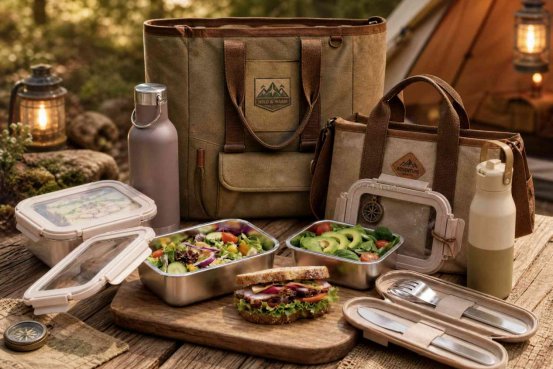
What Is Light Outdoor Kitchenware?
Light outdoor kitchenware consists of familiar household products designed to move naturally beyond the kitchen without becoming highly technical outdoor equipment.
From Indoor Routines to Casual Outdoor Use
The basic functions may stay the same, but portability becomes part of the design brief once a product leaves the home.
Food containers need secure seals and practical stacking. Bottles need lids that can handle movement and remain comfortable to carry. Lunch bags keep several items organized, while spice shakers, grinders, and oil dispensers make food preparation and seasoning more convenient wherever the meal is served.
The functions are familiar. The use cases now extend to commuting, picnics, road trips, BBQs, glamping, and other casual outdoor settings.
How It Differs from Technical Camping Gear
Technical camping equipment often prioritizes minimum weight, compact packing, rugged construction, or performance in demanding environments.
Light outdoor kitchenware serves a different purpose.
The focus is on portability, storage, easy cleaning, insulation, controlled dispensing, and comfortable everyday handling. A picnic lunch box does not need to look or function like expedition equipment. It simply needs to move easily from refrigerator to bag, from car to picnic table.
That distinction gives the category a broader lifestyle role.
Why Light Outdoor Creates a New Kitchenware Opportunity
The growth of casual outdoor activities does not replace traditional kitchenware. Instead, everyday household products are being used across a wider range of environments.
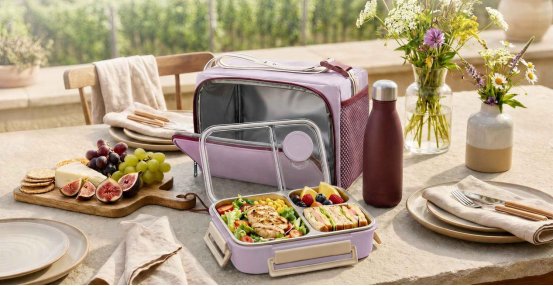
The Gap Between Kitchenware and Outdoor Gear
Conventional kitchenware is usually designed around food storage, preparation, and serving inside the home. Specialist camping products sit at the other end of the spectrum.
Between them is a practical middle ground.
Light outdoor products retain the familiarity and visual appeal of household kitchenware while adding details that make carrying and outdoor use easier.
A transparent food container, for example, still works well for refrigerator organization. A more secure lid also makes it suitable for commuting or picnics. Stainless steel containers offer another option when frequent carrying and resistance to everyday bumps become more important.
One Product Can Serve Multiple Scenarios
Multi-scenario use changes how a product range can be planned.
An insulated bottle can serve multiple purposes from commuting and office use to road trips and outdoor dining. A lunch bag can cover weekday meals as well as weekend picnics. Spice shakers and oil dispensers can move directly from kitchen preparation to BBQ or outdoor serving.
The same product family can therefore support both everyday and leisure use without creating completely separate indoor and outdoor assortments.
Why Light Outdoor Works as a Scalable Product Collection
The value of Light Outdoor becomes clearer when the category is treated as a connected assortment rather than a group of unrelated products.
An outdoor meal may involve food storage, drinkware, carrying, seasoning, and condiment dispensing at the same time. These functions create a natural structure for assortment planning.
Collection Module | Example Products | Role in the System |
Food Storage | Glass containers, stainless steel containers, lunch boxes | Meal preparation and storage |
Drinkware | Insulated bottles, tumblers | Hot and cold beverages |
Carrying | Lunch bags, cooler bags | Transport and organization |
Seasoning | Spice shakers, grinders | Meal preparation and flavoring |
Dispensing | Oil sprayers, oil and vinegar bottles | BBQ, salad, and outdoor serving |
Storage Extension | Jars and canisters | Dry food and ingredient organization |
A collection can start with a compact core and expand by function. This modular structure gives each additional SKU a clear role instead of requiring a completely new product concept every time.
What Makes a Multi-Category Collection Harder to Develop
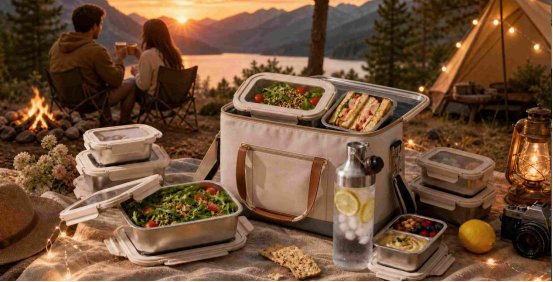
The same variety that makes a Light Outdoor collection attractive also makes development more complex.
Glass containers, stainless steel products, textile bags, grinders, and dispensing tools often involve different manufacturing processes and supply chains. Their MOQs, customization methods, production schedules, and packaging requirements may all differ. At the same time, products from these different categories still need to look and perform as one collection.
That creates a practical coordination challenge. Colors, finishes, product details, and packaging need to stay visually consistent, but quality requirements cannot simply follow a single standard. Food containers depend on sealing performance. Insulated drinkware has temperature retention and lid requirements. Grinders rely on mechanism performance, while oil dispensers need stable and controlled pouring.
The impact goes beyond additional communication. Different production schedules can delay a collection launch. Separately developed packaging may leave the range looking fragmented, while split shipments can increase logistics costs. Uneven MOQs can also create higher inventory commitments during the early stages of a new product line.
Quality follow-up becomes more complicated as well. When several suppliers are involved, identifying where a problem occurred and coordinating corrective action can take longer.
A multi-category collection therefore needs more than individual product sourcing. Development, sampling, production timing, quality control, packaging, and delivery need to be considered as parts of the same project.
How Aelga Supports a Complete Light Outdoor Collection
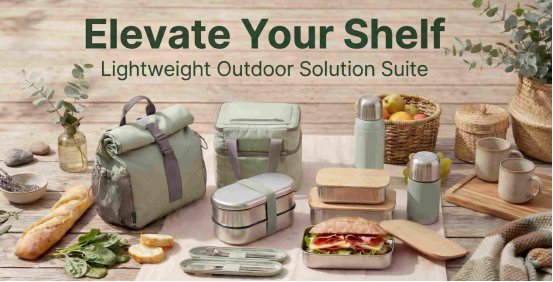
A Multi-Category Product Portfolio
At Aelga, we specialize in the R&D, design, manufacturing, and global distribution of kitchen housewares.
Our existing portfolio covers the main product modules needed for a Light Outdoor collection, including oil and vinegar dispensers, spice shakers and condiment products, storage jars, grinder mills, food containers, meal-prep and on-the-go products, and drinkware.
Food storage can form the foundation through glass and stainless steel containers, lunch boxes, and meal-prep products. Drinkware, carrying products, seasoning tools, grinders, and dispensing products can then extend the same lifestyle direction.
Having these categories within one broader portfolio makes it easier to consider them as a collection from the beginning rather than combining unrelated products later.
From Individual Products to Coordinated Collections
The aim is not simply to offer more SKUs.
Food storage, drinkware, carrying, seasoning, and dispensing need to work together visually and functionally. Product proportions, colors, finishes, packaging, and branding all affect how the finished collection is presented.
Aelga develops product systems around a consistent design language and scalable product families, allowing different categories to follow one broader development direction.
OEM/ODM Helps Keep the Collection Consistent
A unified range also requires development coordination across different product categories.
Aelga’s OEM/ODM service covers stages from initial consultation and structural analysis to prototyping, mold development, pre-production sampling, manufacturing, quality control, logistics, and after-sales support. Customization can include product shape, lids, surface colors, logos, and packaging.
For a multi-category collection, verification also needs to go beyond the initial sample. Based on product specifications and the intended market, Aelga can assist in reviewing relevant food-contact compliance requirements and coordinate sample confirmation with pre-production inspection.
This helps reduce differences between the approved sample and mass production. Flexible sampling also makes it possible to check key individual products as well as the compatibility of the full collection before moving into bulk production.
Start with the Scenario, Then Expand the Range
A Light Outdoor collection does not need to begin with dozens of products. Starting from a defined use scenario creates a clearer path for assortment development.
Scenario | Core Combination | Possible Expansion |
Work-to-Picnic | Lunch box + bottle + lunch bag | Spice shaker + compact storage |
Family Picnic | Food containers + drinkware + carrying bag | Grinder + oil dispenser + serving accessories |
Road Trip | Portable food storage + insulated bottle | Snack storage + condiment products |
Glamping | Food storage + drinkware + spice tools | Oil dispenser + grinder + dining accessories |
Starting from a real scenario keeps assortment growth practical.
Each additional SKU should fill a clear function—preparation, storage, carrying, drinking, seasoning, serving, or organization—rather than simply adding more variety.
That also makes assortment planning more flexible. A compact initial collection can test a particular lifestyle direction before additional formats, capacities, accessories, or complementary categories are introduced.
Conclusion
Light Outdoor kitchenware reflects a broader change in how everyday products are used. The boundaries between home, work, travel, picnics, and casual outdoor dining are becoming less rigid.
This creates room between conventional household kitchenware and specialist camping equipment. Familiar products can be adapted for easier carrying, storage, preparation, and serving while remaining useful in everyday life.
Aelga combines a multi-category kitchenware portfolio with OEM/ODM development capabilities to coordinate product selection, sampling, customization, quality control, and packaging across a collection.
Contact Aelga to discuss your Light Outdoor collection. We can help define your target market, SKU range, budget, and customization needs from concept to sampling.
FAQ
Q: What Is Light Outdoor Kitchenware?
A: Light Outdoor kitchenware includes familiar food storage, drinkware, carrying, seasoning, and serving products adapted for everyday indoor routines as well as casual outdoor activities such as picnics, road trips, BBQs, and glamping.
Q: Can a Light Outdoor Collection Start with Only a Few SKUs?
A: Yes. A collection can begin with a compact core range and add complementary categories after the initial product direction has been validated.
Q: How Can Different Products Maintain a Consistent Collection Identity?
A: Shared colors, finishes, product details, branding, and packaging can create a consistent visual language. Quality requirements should still be set according to the function of each individual product.
Q: Does Aelga Support OEM and ODM for Multi-Category Collections?
A: Yes. Aelga supports multi-category development from concept and sampling through manufacturing and quality control. Customization can cover product forms, lids, colors, branding, and packaging, while product verification can also be coordinated according to product specifications and target-market requirements.