

Lunch Box Market 2026: Material, Channel, and Opportunities
At the recent Canton Fair, a single lunch box line drew questions from buyers in completely different channels, each with its own material preference. That observation points to how the 2026 lunch box market actually works: it is no longer one category with one "best" product. The same line now reaches premium grocery, office, school and outdoor buyers at once, and each group judges the product by a different set of criteria. For a brand buyer, the question is therefore not which material is best, but how material, channel and target customer fit together. This article breaks that fit down in three steps: how the product is actually used, which material fits which channel and customer, and how to turn both into a concrete product line.
How Home and Commute Lunch Box Demand Differs
Buying lunch boxes is increasingly led by use case rather than size. The two largest everyday segments, home and commute, pull product design in different directions, and everyday outings add a third set of expectations.
The Home and Family Kitchen
In the home, a lunch box is usually also a food storage container. Buyers care that it reheats food well, survives repeated washing, and does not absorb or hold odors. A home version should also serve a secondary role, holding leftovers that later go to work or school, which is why a leak-proof lid and a stackable profile are valued.
The Commuter and Office Worker
The commute is defined by its constraints: the product must seal reliably, carry a secure lid, and fit into a bag without leaking. Portability and a compact shape matter more than any other feature.
School and Everyday Outings
School and daily outings add a durability dimension. Boxes are dropped, shared and washed more often, so buyers look at robustness, capacity and compartment design, and at how easy the box is to carry day after day.
None of these use cases decides the material on its own. That decision belongs to the channel and the customer who will actually buy the product.
Material, Channel, and Consumer Fit
Glass, stainless steel, and plastic or silicone dominate shelf space in 2026. A useful habit for product planning is to look at each material through three lenses: what the material is good for, which channels it can serve, and which customer it is really selling to. One material can work in several channels at once, so the fit is never a fixed pair, it depends on the specific product, its features, its price and the target customer.
Glass Food Containers
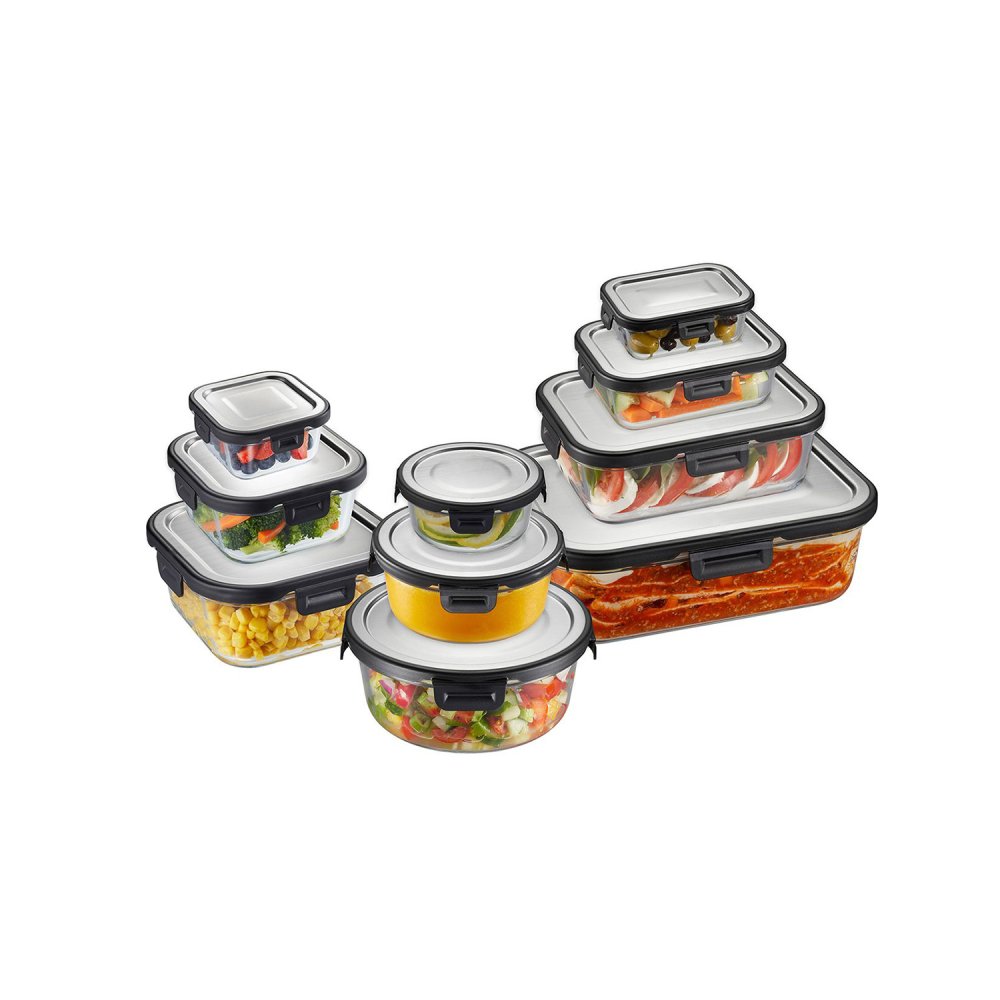
Borosilicate glass is the premium format: it resists heat, does not absorb odors, keeps the food visible, and usually moves straight from fridge to microwave. Because the contents stay in view, glass suits meal-prep routines and pantry-to-lunch use.
In terms of channels, glass can serve more than one outlet. In home retail it is judged on appearance, material feel and whether it can be sold as a series. In supermarkets it only works where price and size sit right for a premium mass offer. On e-commerce, visible food and microwave use are the strongest selling angles, which is why well-presented glass converts well online. The customer behind a glass line is typically health-conscious or meal-prep minded, often buying round plus rectangular sets that raise the average order value.
Stainless Steel Lunch Boxes
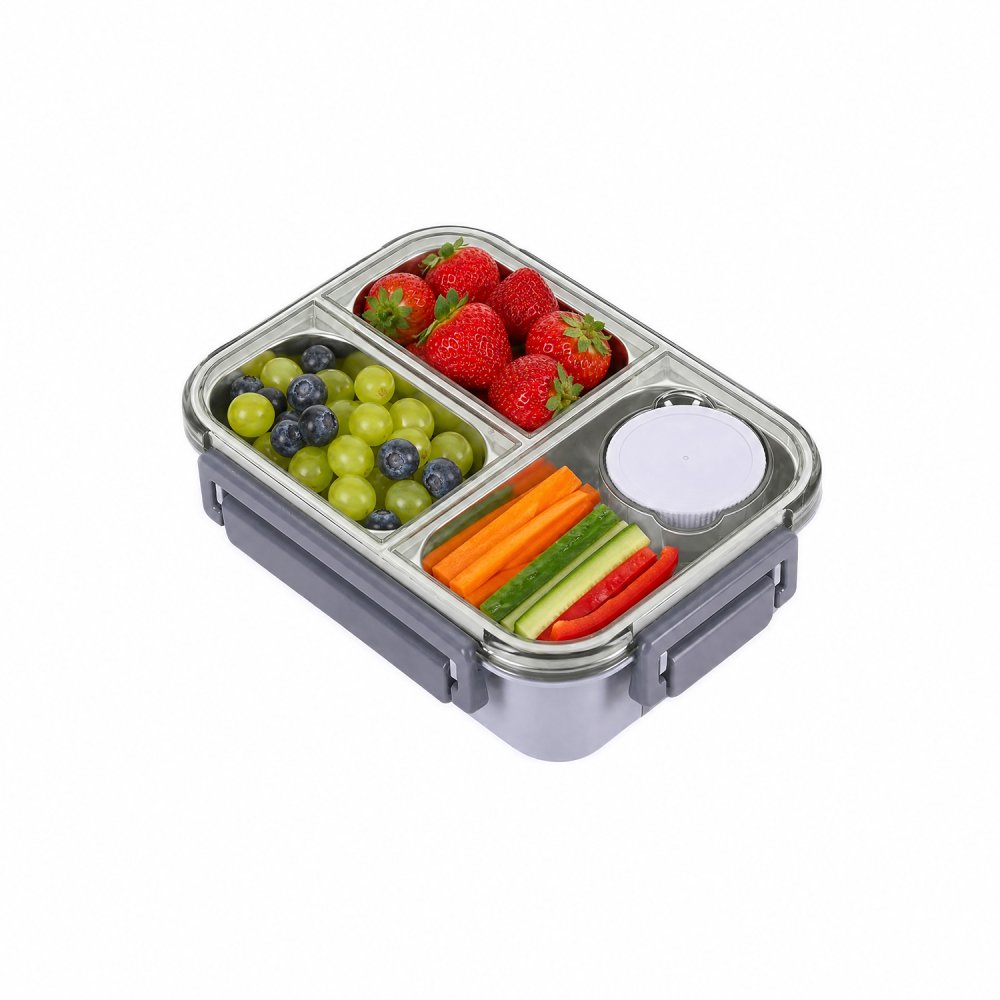
Stainless steel is often selected for its durability and resistance to everyday wear. It resists rust and odors, survives drops that would shatter glass, and holds up to repeated washing. For buyers, that translates into long service life at a stable unit cost.
Stainless serves institutional and school programs, office and catering buyers, and outdoor or sporting retail. Warehouse clubs and big-box channels buy it in bundles, while school supply channels judge it on build quality, capacity and compartment design. The customer is usually an institution, a volume purchaser, or a brand targeting school, work and outdoor use, and large-capacity divided designs are the most requested format.
Plastic and Silicone Formats
Plastic and silicone are the entry-level formats: lower cost, lighter weight and a wide color range. They are the natural choice for mass-market shelves, promotional merchandise and kids lunch lines, where color is often the deciding factor at the shelf.
These materials also perform well in e-commerce, where color and price drive impulse purchases, and in high-volume retail with short shelf cycles, where turnover matters more than longevity. The buyer is usually a price-sensitive mass retailer, a promotional or gift buyer, or a brand building an affordable entry tier. A brand planning a full price ladder typically keeps this tier below its glass and steel lines.
Development Angles for Brand Buyers
Once the use cases and the material-channel fit are clear, the real work for a brand buyer is turning both into a product line: a price ladder, a capacity plan, and, where it makes sense, an extension into light outdoor.
Build a Price Ladder
A practical line has three tiers. The basic tier covers everyday food storage and carry, plain and affordable. The functional tier adds practical features, such as divided compartments and leak-resistant lids, to make daily use more convenient. The design or set tier differentiates through appearance, material combination, or pairing with related products. The ladder lets one brand serve entry, mid and premium shelves at once, and each tier can be matched to the channels described above.
Turn Usage Needs into Capacity and SKUs
Rather than re-explaining who uses a lunch box where, plan the capacity range from those needs: a smaller single-tier format for a single serving, a mid-size divided format for school and office lunches, and a larger divided format for family meals or shared meals on the go. The rule of thumb is to let one capacity series cover two or three use cases, so the SKU count stays manageable while the line still feels complete.
Extend from Lunch Boxes into a Light Outdoor Program
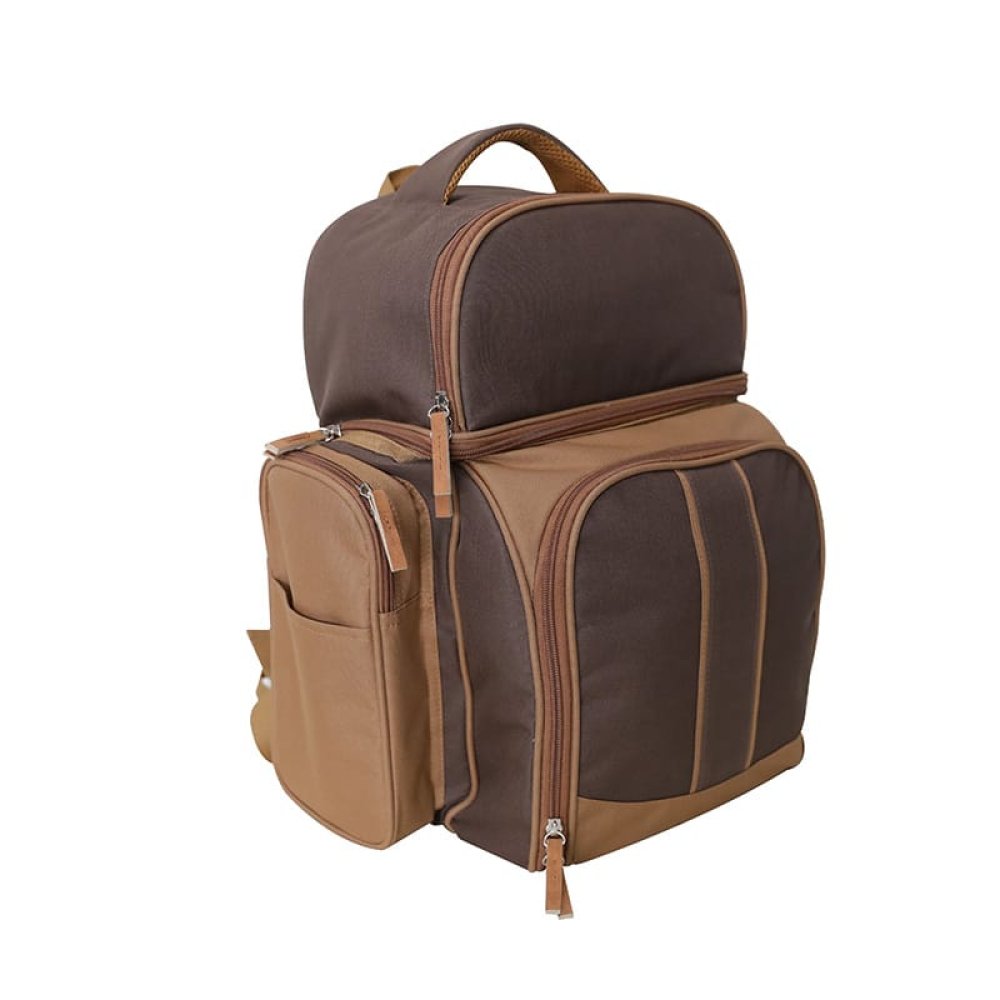
The needs that drive a lunch box, leak-proof sealing, easy cleaning and portability, are the same needs behind the light outdoor formats. A brand can therefore extend the line from the lunch box into insulated lunch bags, cooler bags, cooler backpacks and insulated bottles, where the products are functionally complementary and sell together as scenario-based sets: a picnic set, a commuter set, a weekend set.
Aelga’s product development covers portable food storage, drinkware and the light outdoor category, including lunch boxes, insulated bottles, lunch bags, cooler bags and cooler backpacks. Aelga works across glass, stainless steel and mixed materials, so buyers can plan products flexibly for different market positions and use scenarios. Backed by in-house R&D, design and production, Aelga takes on OEM and ODM projects, from a single item to a complete coordinated series. Aelga’s design work has received international recognition, including the iF Design Award. This helps brand clients explore different structures, materials and appearances while keeping related categories within one consistent product matrix. Packaging can also be planned in the early stage: windowed, retail-ready boxes and gift bundles let brands present several related products as one series, and add more options for seasonal marketing and promotional campaigns.
Conclusion
A successful lunch box line starts with understanding how consumers use the product, which channels it moves through and who the target customers are. For brand buyers, that means planning beyond a single item: matching materials, capacities, features and related categories into a coherent combination. Aelga has in-house R&D, design and production, and takes on OEM and ODM projects across glass, stainless steel and mixed-material products. From lunch box specifications and SKU planning to full food storage and light outdoor series, Aelga works with brand clients to build a complete product line around market demand. If you are developing lunch boxes for your brand or looking to expand into light outdoor categories, contact Aelga to discuss product specifications, material options and OEM/ODM customization with you.
FAQ
Which material is best for a home lunch box?
Borosilicate glass is the usual choice for home use: it resists heat, does not absorb odors, and, where the lid allows, goes straight from fridge to microwave. Pick stainless steel if the household needs a box that simply survives daily drops.
Can a glass lunch box be used in a microwave and dishwasher?
Yes. Borosilicate glass bodies are microwave-safe and dishwasher-safe. Keep metal lid parts out of the microwave, and confirm the lid design of the specific model before bulk ordering.
How should a buyer choose between glass and stainless steel for office use?
Choose glass when access to a microwave is important and buyers value visible food storage and odor resistance. Choose stainless steel when durability and resistance to impact matter more for daily carrying. Some office programs may offer both, depending on employee needs and product specifications.
What should a buyer confirm before placing a bulk lunch box order?
Confirm the seal mechanism and leak test, the lid construction, the reheating guidance, and how the packaging protects lids and corners in transit. For mixed-material sets, also ask how each component is inspected before packing, and agree quantities and lead times early, since both depend on the configuration.